Why 2026 Is a Metadata Year
Libraries keep expanding, and search systems are getting stricter about relevance. If your metadata does not match buyer intent, great visuals still stay hidden. In 2026, discovery is won by accuracy, order, and consistency across your portfolio.
Intent Clusters Beat Keyword Walls
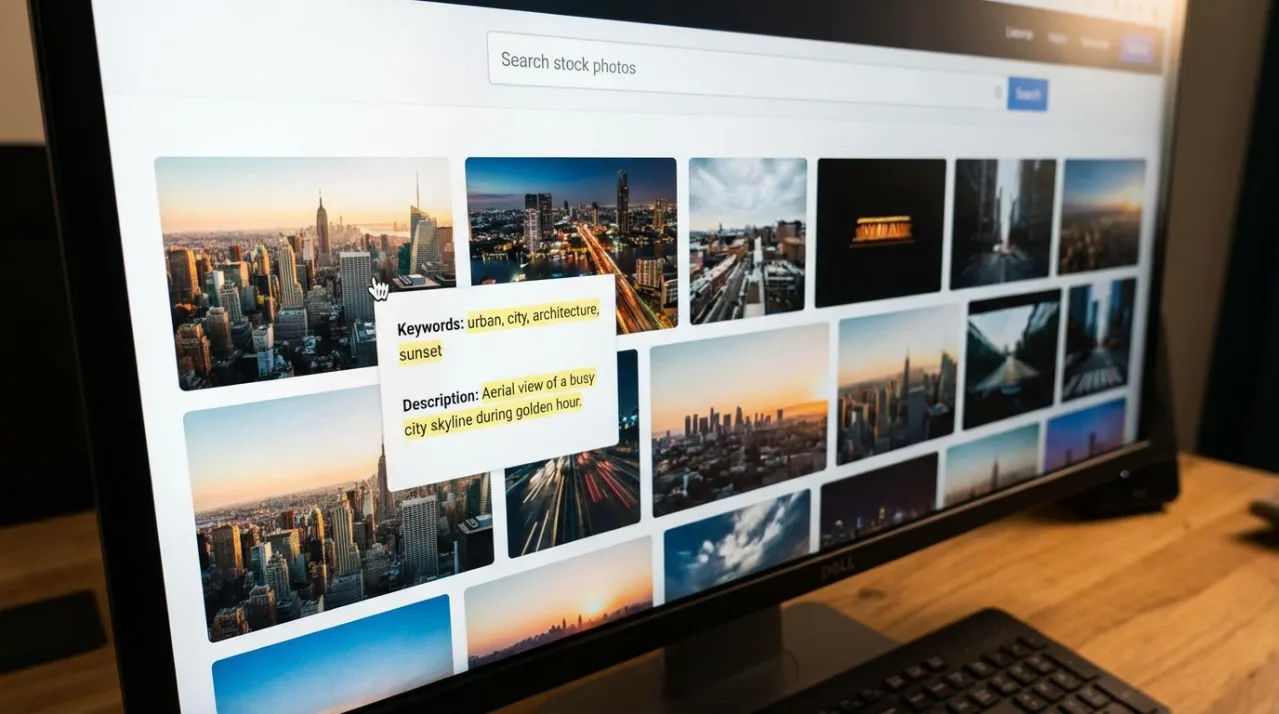
Buyers type short queries but expect specific results. Build intent clusters instead of long, flat lists. A high-performing cluster usually contains subject, action, use case, and style. Example: “isolated coffee cup, top view, menu design, minimal.”
Titles Must Read Like Descriptions
Some marketplaces require titles to be clear, descriptive sentences in English, not keyword lists. For example, Shutterstock requires a descriptive sentence of at least five words and caps description/title length at 200 characters. If your title is factual and complete, approvals are faster and search is more accurate.
Keyword Order Is a Ranking Lever
On Adobe Stock, keyword order affects relevance, and the first 10 keywords carry the most weight. That makes your top 10 a strategic set: subject, action, and primary use case. Avoid alphabetical ordering and place the most important terms first.
Right-Sized Keyword Counts Win
Most platforms cap keyword counts and expect relevance. Shutterstock requires 7–50 keywords, while Adobe Stock’s own guidance suggests a sweet spot around 15–35 keywords and a maximum of about 50. The practical rule: keep only terms that precisely describe the asset and remove repeats.