Overview
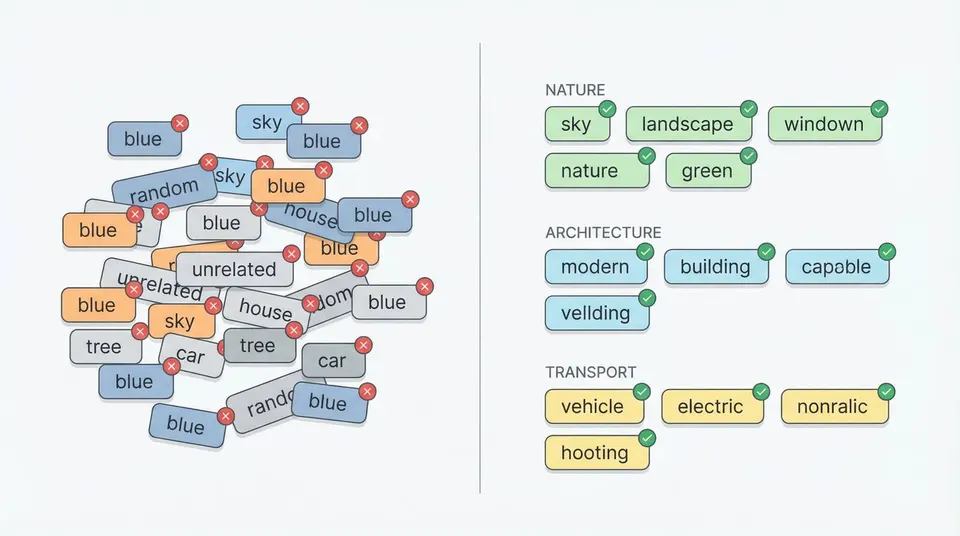
Most stock contributors do not have a content problem. They have a system problem. They create solid visuals, upload consistently, then hit a ceiling as downloads flatten and approvals fluctuate. In almost every case, the bottleneck is not style or production quality. It is metadata quality at scale. This article is about building a repeatable metadata operating system that makes your portfolio searchable across agencies while keeping listings safe from spam patterns and policy issues. It naturally includes terms people search for like stock photo metadata, metadata stock photo, stock photo keywords, automatic keywording, AI keywords, and AI keywording because the goal is to answer those searches with real, usable detail.
Why a Metadata System Beats Better Keywording Tips
If you upload 50 files per month, you can manually write decent titles and keywords. If you upload 500 or 5,000, manual processes break. When they break, titles become generic templates, keyword lists become repetitive and noisy, and descriptions shrink into vague lines. Platforms reward relevance, clarity, and consistency and warn against keyword spam and irrelevant terms. The mission is not more keywords. The mission is better structure and repeatability.
The 2026 Reality: Keyword Order and Quality Are Ranking Signals
Adobe Stock states that keyword order is crucial and that the first 10 keywords have the most weight in search placement. Shutterstock states they regularly audit for keyword spamming and inappropriate or restricted keywords. That gives you two non negotiables: your top keywords must be the best buyer terms, and your keyword lists must stay clean, accurate, and non spammy. A system makes this automatic. Improvisation makes this inconsistent.
The Metadata Stack: Treat Each Asset Like a Product Listing
A strong stock listing answers four buyer questions quickly: what is it, what is happening, what does it represent, and how can I use it in a design or campaign. Your metadata should map to those questions in a predictable order. That is how you make stock photo metadata work for you and how you avoid the spam look when you use automatic keywording or AI keywords.
The Three Layer Keyword Model That Scales
Layer 1 is literal keywords for what is visible and undeniable. Layer 2 is context and action keywords for what is happening and what the scene communicates. Layer 3 is use case and layout keywords for how the asset is used in marketing and design. Many contributors stop at Layer 1. Buyers do not. Buyers search across all three layers, but Layers 2 and 3 must remain visually defensible.

Automatic Keywording and AI Keywords: Strengths and Failure Points
Automatic keywording tools and AI keywords are strong at detecting objects and environments, suggesting broad concepts, and building a first draft quickly. They often fail by over tagging concepts not clearly supported, adding duplicates, inserting irrelevant related keywords, producing generic adjectives, and accidentally adding brand or sensitive terms. That failure pattern can cross into spam territory, so AI keywords must be treated as a draft that passes a strict filter.
The Clean AI Keywording Workflow for 2026
Workflow: 1) Generate first draft metadata using a tool such as stocktag.ai. 2) Apply the truth filter and delete anything not clearly true or supported by the content. 3) Fix the top 10 keywords intentionally, especially for Adobe Stock. 4) Remove spam patterns like repeated roots or excessive synonym lists. 5) Add missing buyer terms AI often forgets, such as copy space, banner, template, website hero image, presentation background, or isolated on white, only when accurate.
Titles That Look Human and Still Rank
A reliable title formula is primary subject plus one key qualifier plus action or concept plus context. Examples include woman working on laptop in home office, remote work productivity; minimal glass texture background with soft light and copy space; flat vector finance icons set for dashboard UI and analytics. Avoid duplicating phrases from the description or repeating the same words unnaturally.
Descriptions That Rank and Also Reduce Mistakes
Descriptions should be search friendly clarity, not long essays. A good description includes what is in the scene, what is happening, what concept it represents, one realistic use case, and composition notes like copy space only if accurate. Avoid spam, errors, and sensitive personal information.
A Portfolio Level Strategy: Build Metadata Templates by Content Type
If you want consistency, do not start from scratch for every asset. Build templates and adapt them. Lifestyle photos: subject plus action plus setting plus concept. Abstract backgrounds and textures: material or style plus background plus key light or color plus use case. Vector icon sets: niche plus icon set plus usage plus style. Stock video B roll: subject plus motion plus style plus use case. This is how you scale with automatic keywording without producing generic output.
Google SEO Angle for Your Blog
If your goal is Google traffic for searches like stock photo metadata or automatic keywording, follow Google guidance: create helpful, reliable, people first content rather than content designed to manipulate rankings. Keep one clear page title, strong section headings, practical checklists and examples, and minimal repetition. Keywords like stock photo keywords and AI keywording should appear naturally because the content genuinely teaches the workflow.
Practical Examples: Clean Metadata Sets That Do Not Look Spammy
Example 1, remote work lifestyle photo. Title: Woman working on laptop in home office, remote work productivity. Description: Woman typing on a laptop at a home office desk with notebook and coffee, remote work and productivity concept, suitable for business marketing, blog headers, and social media use. Top keywords: remote work, home office, woman working, laptop, productivity, freelancer, work from home, business concept, copy space, planning. Example 2, abstract glass texture background. Title: Minimal glass texture background with soft light and copy space. Description: Clean abstract glass texture background with soft light reflections and negative space, ideal for branding, website banners, and presentation backgrounds. Top keywords: glass texture, abstract background, minimal background, copy space, soft light, reflection, transparent, modern design, branding background, website banner.
Where stocktag.ai Fits in a Serious Workflow
In a high volume workflow, the goal is speed with control. stocktag.ai can sit at the center of your pipeline as a stock photo metadata engine that generates titles built from the correct formula, descriptions that stay factual and commercial friendly, stock photo keywords grouped by intent and ready for ordering, and AI keywords without duplicate spam patterns. Then you do a short human pass using the truth filter and top 10 keyword priority rules.
The 2026 Checklist: What to Verify Before Every Upload
Checklist: 1) Title is clear and not repetitive or stuffed. 2) First 10 keywords are the strongest buyer terms. 3) No irrelevant keywords or excessive repetition. 4) Description adds context and one realistic use case. 5) Use case keywords like copy space and banner are only included when true. 6) Metadata is free of sensitive identifiers and obvious errors.
Bottom Line: You Do Not Need More Keywords, You Need a Better System
The contributors who grow in 2026 are not the ones who chase every new trick. They are the ones who run a consistent, clean metadata system across thousands of uploads. Use automatic keywording and AI keywords for speed, but never skip the truth filter. Prioritize top keywords intentionally and avoid spam patterns. If your blog is meant to rank on Google for stock photo metadata topics, build a page that genuinely teaches the workflow.
Sources
Shutterstock keyword and title spamming definition: submit.shutterstock.com/help/en/articles/10617485-how-are-keyword-and-title-spamming-defined. Adobe Stock keyword organization guidance: helpx.adobe.com/stock/contributor/help/how-to-organize-and-add-keywords-.html. Shutterstock visibility guidance: submit.shutterstock.com/help/en/articles/10617438-how-can-i-maximize-my-visibility. Google helpful content guidance: developers.google.com/search/docs/fundamentals/creating-helpful-content. Google title link guidance: developers.google.com/search/docs/appearance/title-link.